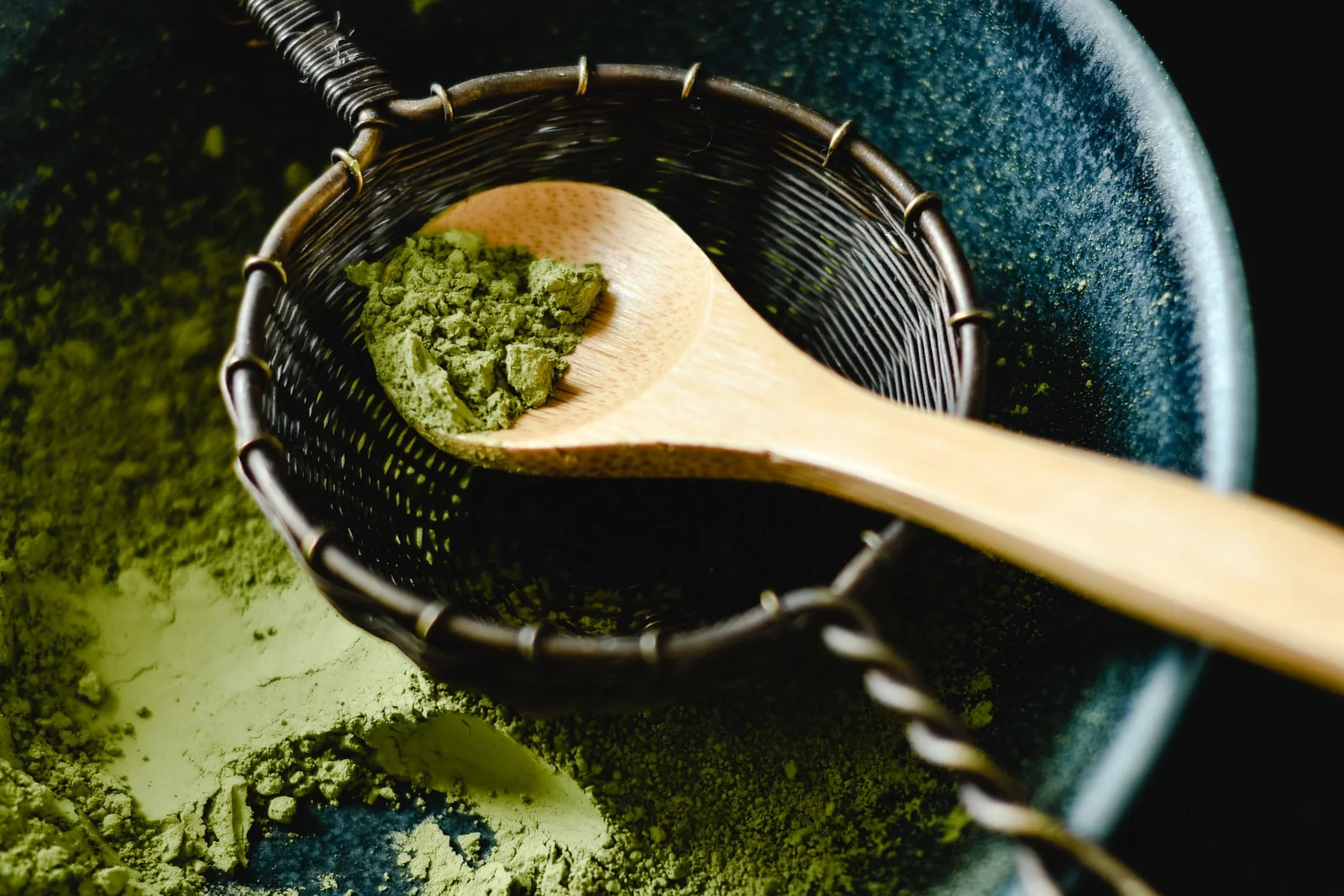
Flow · fill · mouthfeel
Particle size (mesh)
How finely the dried leaf was milled and sieved. Determines flowability, solubility, mouthfeel, and capsule-fill suitability.
We reply within one business day
Specifications · Grades & mesh
Moringa powder grades specification is the set of measurable parameters — particle size (mesh), moisture content, color grade, microbial limits, and heavy-metal ceilings — that define what product a buyer is actually contracting for. Get the spec right before you request a sample.
Five components
A complete moringa powder grade specification has five components. Every one of them belongs on a batch Certificate of Analysis (COA); none of them should be taken from a supplier's marketing page.
Flow · fill · mouthfeel
How finely the dried leaf was milled and sieved. Determines flowability, solubility, mouthfeel, and capsule-fill suitability.
Drying quality
Proxy for oxidation damage and drying quality. Bright-to-mid green = healthy chlorophyll retention. Browning signals heat exposure, slow drying, or extended storage without adequate packaging.
Shelf stability
The single number most correlated with shelf stability and microbial risk. Export-appropriate target per CGIAR data: below 7.5% at 50 °C for 30 minutes.
Pathogen panel
Total plate count, yeast and mold, E. coli, coliforms, and — the non-negotiable — Salmonella absent in 25 g. These are buyer-specified for dried botanicals.
Pb · Cd · As · Hg
Heavy metals (Pb, Cd, As, Hg) tested per lot by ICP-MS or AAS. Buyer-conservative botanical targets often run tighter than the regulatory minimums.
Each of these should appear in the spec language of your purchase order, not just in a general quality clause. Suppliers who quote moringa without providing batch-level data on all five are asking you to buy blind.
Mesh size
Mesh describes how many wires per linear inch a sieve has — a 100-mesh sieve has 100. These are general ASTM/ISO engineering tables, not moringa-validated standards, so confirm which sieve standard the supplier's laboratory uses.
Finer grinding is not free: moving from 100 to 200 mesh takes more milling passes, sieve time and energy, and yield drops — expect the FOB price to reflect that. A “500-mesh” claim (~25 µm) is micronization territory: ask for a measured d50/d90 from an independent lab.
Color grade
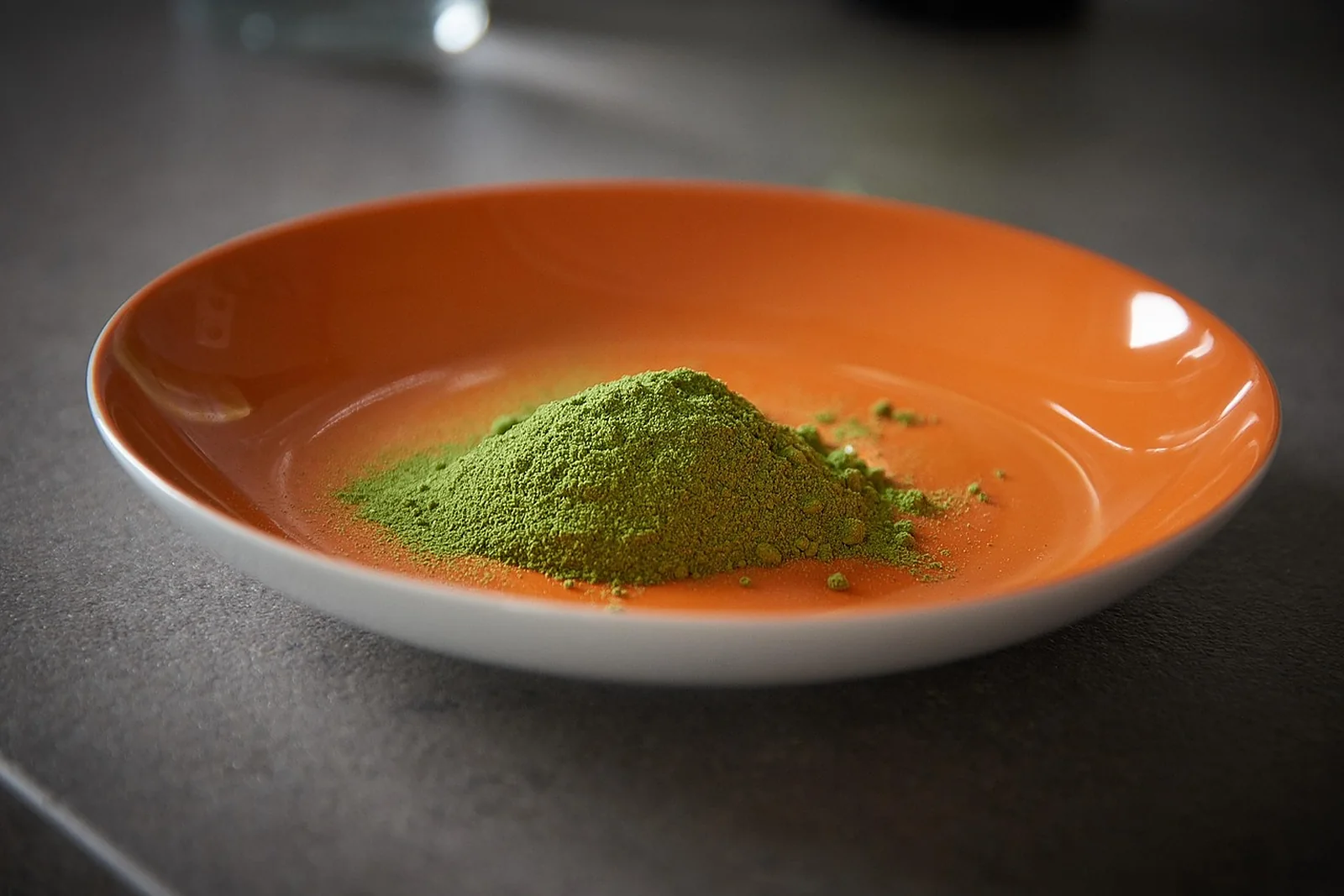
Color is one of the most reliable non-destructive indicators of how the leaf was handled between harvest and packaging — and it is easy to assess visually on a sample before you run any lab tests.
Chlorophyll degrades through heat (above roughly 50–55 °C) and direct solar radiation. Shade-drying at ambient temperature, or cabinet drying at 35–55 °C with a maximum load of around 2 kg per square meter, preserves the bright color buyers associate with quality.

Grade by channel
The distinction is primarily about the regulatory framework the finished product will fall under, not necessarily about a physically different raw material. That said, the two channels typically end up with different practical specifications.
Salmonella absent in 25 g is the legal standard for ready-to-eat foods — which moringa powder functionally is when mixed raw into smoothies or capsules consumed without further cooking.
Typically faces less stringent food-microbial requirements, but may require a finer particle size — 200 mesh or finer — to prevent gritty texture in leave-on or wash-off products.
Leaf powder or standardized extract?
Make sure the COA clearly states whether you are receiving leaf powder (whole milled moringa leaf) or a standardized dry extract (solvent extraction and spray-drying, standardized to a marker compound at a set ratio like 10:1). These are not interchangeable: “moringa extract” on a leaf-powder order is a significant mismatch — not a grade variation.
Grade by application
Different applications genuinely need different specifications. Buying one grade for several applications is a procurement shortcut that tends to surface at the worst moment — when a capsule fill line jams or a beverage batch settles and separates.
100 mesh or finer
Encapsulation demands a powder that flows through filling equipment without bridging or clogging. 100 mesh or finer is the standard starting point.
80–100 mesh
80 mesh gives acceptable dispersion with agitation; 100 mesh disperses more readily. Finer than 100 mesh does not necessarily improve the beverage experience proportionally, and costs more.
60–80 mesh
Protein powders, superfood blends and culinary ingredients: 60–80 mesh is often sufficient. The key concerns shift toward flavor, moisture and heavy-metal levels.
200 mesh and finer
Formulators typically want the finest available particle size for masks and emulsions where texture is perceptible. For haircare rinse-off products, 100–200 mesh may be acceptable.
Sourcing across applications? Consider specifying two grades rather than one compromise grade. The cost difference between a supplier's 80-mesh food-grade and 100-mesh encapsulation-grade is usually modest relative to the production headaches a mismatched spec creates.
Reading a moringa COA
A batch Certificate of Analysis either confirms your grade spec was met or tells you it was not. Here is what each line should contain — and which numbers should trigger a second look.
Target for export-grade material. Many commercial trades accept up to 8–10%; above 10% is a red flag for shelf life and microbial risk.
Ask for
Water activity (aw) too if you encapsulate — a powder at 7% moisture can still sit above 0.6 if it has not been properly conditioned.
The defensible range for leaf powder. It varies with soil mineral content, so a single lot outside that range is not necessarily adulterated — but 15% total ash warrants investigation.
Ask for
Acid-insoluble ash alongside it — elevated relative to total ash, it can indicate stem material, grit or adulteration.
Should be low. High acid-insoluble ash suggests sand, silica, or stem and bark material — a processing quality problem.
The defensible range based on multiple published analyses. Claims above 30–35% are frequently location-specific, method-specific, or marketing-inflated. Stem-heavy powder trends toward the lower end.
Ask for
The analytical method (Kjeldahl or Dumas) and whether the conversion factor is 6.25 (standard) or moringa-specific — it affects the reported number.
“100% through 60 mesh” — coarse, lower cost; “95% through 80 mesh” — typical for conventional green-drink powders; “100% through 100 mesh” — encapsulation and premium drink-mix, where the full batch must pass.
Ask for
A particle-size distribution report — d50 and d90 — where uniformity matters: capsule lines, spray-dry blends, cosmetic emulsions.
Missing from many standard COA templates. Stems lower protein density, raise fiber and acid-insoluble ash, dilute the color grade and shift L*a*b* values; fine stem fibers still affect mouthfeel through a 100-mesh sieve.
Ask for
The sorting protocol in the supplier's production SOP — CGIAR's guide instructs processors to remove thick stalks before washing and drying.
A single representative COA from one batch six months ago is not proof of ongoing quality — nutrient content varies with soil type, harvest season, leaf age at cutting, and drying conditions.
Ask for
A fresh COA from the specific lot you are buying. Any supplier who objects is worth being suspicious of.
Buyer specifications
Typical buyer specifications for dried botanical powders — not moringa-specific regulations. Salmonella is not negotiable: a COA that shows it detected, or lacks the test line entirely, should stop the batch.
At minimum, require Pb, Cd, As and Hg per lot. EU Regulation 2023/915 sets maximum levels for food supplements and leaf vegetables — the specific limits depend on how your product is classified at import. Distributing in California? Check current Prop 65 daily exposure limits with your regulatory counsel.
Honest sourcing note
We are an independent Indonesia moringa sourcing desk. We do not operate a processing facility or hold any certifications ourselves. We help buyers specify correctly, verify that a supplier's claims align with their documentation, and connect you to processors whose COA history and production practices match your requirements.
If a partner you source through after using our help proceeds with a transaction, they may pay us a referral fee at no extra cost to you. No one can pay to change what we publish or which specifications we recommend.
About the deskGrades FAQ
80 mesh moringa powder has particles up to approximately 180 micrometres; 100 mesh is finer, with particles up to approximately 150 micrometres. In practical terms, 80 mesh is the standard for herbal tea blends and conventional green-drink powders where a slightly gritty texture is acceptable. 100 mesh disperses more smoothly in water and is the minimum most capsule-filling operations require for consistent fill weight. Neither figure is from a moringa-specific validated standard — both come from general ASTM/EU sieve tables applied to herbal trade practice.
Browning is chlorophyll degradation, driven by heat, light, and oxidation. It happens during sun drying, high-temperature milling without in-process cooling, or storage in packaging with poor oxygen and moisture barrier. Once the chlorophyll has broken down, the color cannot be restored. This is why process documentation matters before you buy: ask for the supplier's drying temperature records and packaging specifications. Shade-drying at ambient temperature or cabinet drying at 35–55 °C preserves the bright green color; direct sun at 60–80 °C destroys it. Any powder showing significant browning at intake should be rejected for food and cosmetic applications.
Food grade moringa leaf powder is produced and tested to meet food-safety requirements — GMP manufacturing, pathogen testing including Salmonella, heavy-metal limits, and (for US supplement sales) compliance with 21 CFR Part 111. Cosmetic grade is produced for topical use; it must meet cosmetic contaminant rules but is not held to food-safety microbial standards. In practice, cosmetic grade often specifies a finer moringa powder particle size (200 mesh or finer) and focuses on texture and skin-compatibility parameters. Do not use cosmetic-grade material in an ingestible product; the two grades exist precisely because the safety frameworks differ.
Both, ideally. A mesh sieve pass statement ("100% through 100 mesh") tells you the maximum particle size in the batch. A d90 value from a particle-size distribution analysis tells you where 90% of the powder mass sits — critical for predicting capsule-fill behavior, dispersion rate in liquids, and sensory texture. For standard food-ingredient purchasing, a mesh pass spec is the minimum acceptable. For encapsulation, high-speed blending, or cosmetic applications where particle uniformity is commercially significant, add a d90 requirement and ask the supplier to run the test on every production lot, not just development samples.
It depends entirely on your application — and on whether the particle-size claim is verified by measurement rather than a sieve pass statement. 500 mesh corresponds to approximately 25 micrometres, which is in micronization territory. At that fineness, moringa powder re-absorbs ambient humidity extremely quickly (a problem documented for moringa powder at all mesh sizes and more acute at ultra-fine), and flowability on filling lines can become problematic without flow agents. If an application genuinely requires sub-25-micrometre particles — certain cosmetic emulsions, for example — then micronized moringa has a legitimate use case. For most supplement and beverage applications, there is no evidence that going below 100 mesh (150 µm) delivers a meaningful performance improvement. If a supplier promotes 500-mesh at a price similar to 100-mesh product, request an independent particle-size distribution report with d50 and d90 measurements. Verify the claim before paying for it.
Related specifications
Grades are one layer. Testing, certification, processing and packaging each have their own guide — and so do the sourcing steps that follow.
Brief the desk
Send us your application, target market, volume, and any COA requirements you already have. We will come back with a grade recommendation and a list of questions worth putting to any supplier you are evaluating.
We reply within one business day
Handled by BD Juara Holding Group